Monday, March 3, 2014

Disney's Growing Diversity


When you think of Disney you might think of the infamous mouse or his father Walt Disney. You might even think of their homes at Disneyland and Walt Disney World. Either way when Disney is mentioned, multiple images of characters, adventures and magic might bring warm smiles to your soul and you may start Tigger bouncing with happiness. Non Disney fans might remain unaffected by Disney but become curious observers of those Tigger bouncing. Others lacking of interest in Disney may originate from unacceptable images of Disney's past. 

Henry Giroux (1997) wrote about Disney's past in his article Are Disney Movies Good for your Kids? ''Racial Stereotyping is another major issue that surfaces in many of the recent Disney animated films. But the legacy of racism does not begin with the films produced since 1989; on the contrary, a long history of racism associated with Disney's work can be traced back to denigrating images of people of color in films such as Song of the South, released in 1946, and The Jungle Book, which appeared in 1967. Moreover racist representations of Native Americans as violent "redskins" were featured in Frontierland in the 1950s. In addition, the main restaurant in Frontierland featured the real-life figure of a former slave, Aunt Jemima, who would sign autographs for the tourists outside of her "Pancake House." Eventually the exhibits and the Native Americans running them were eliminated by Disney executives because the "Indian" canoe guides wanted to unionize. They were displaced by robotic dancing bears. Complaints from civil rights groups got rid of the degrading Aunt Jemima spectacle."

I know many Disney fans who are shocked when learning Disney's history and want to keep it "light and fun" and ride every ride but there is more...

Like Giroux, another author Gabriel Gutierrez (2000) wrote an article Deconstructing Disney: Chicano/a Children and Critical Race Theory. This article presents quite a thorough history of Disney's marketing child centered merchandise in both the United States and Spanish speaking countries; "Disney's inflated prices for Spanish-language videocassettes are not surprising when understood in context of Disney's historical relationship with Spanish-speaking communities throughout the western hemisphere...Disney's relationship with the Spanish-speaking community has always been questionable at best." Another passage that caught my attention was that of The Mouseketeers of 1955. While many of us who watched The Mickey Mouse Club during our childhood through adolescence may remember when Christina Aquilera, Britney Spears and J.T. (Justin Timberlake), Keri Russell, J.C. Chasez and Ryan Gosling were Mouseketeers, Gutierrez states, ''The Mouseketeers (1955) presented a caucasian child culture in happy settings with catchy songs. These children, with white names emblazoned across their shirts and mouse ears, were identifiable as mainstream American, while children of color were excluded from such exposure. The overt display of happiness hid real problems. For instance, in a 1991 television interview, former - Mouseketeer Annette Funicello reveals that every time a Mouseketeer lost a pair of ears, "Disney took $50 out of the kid's next paycheck (Smoodin 1994, 1).

Yikes...Who would have known unless these secrets were exposed right?

So now, eighteen years later after Giroux's article and fourteen years after Gutierrez's work, Disney has made steps toward revising their adventures to recapture more accurate images of culture both domestic and internationally. As Disney is continually creating new stories for children and adults awaiting a new adventure, Disney tales are becoming more culturally accurate with better themes, dilemmas and character development. In 2011, I came across Mickey's Dance Crew at Disney's California Adventure. Actually my mother found it while waiting for me. I had just exited the Aladdin show and when I called to find her she was fairly close. Located where the Tron party took place during the evenings (currently The Mad Hatter Party in 2014),  I quickly followed the beat and found my mother and a very hip mouse. When I saw the dance crew members, I was reminded of the Step Up movie franchise and MTV's  ABDC (America's Best Dance Crew) television series. While the 1980's movie Beat Street is similar with B - boys - breakdancers trying to find their break, movies of the 2000's like Honey, You Got Served reveal the dedication and perseverance needed to continue their life's passion, dancing, amid their daily life obstacles. Contestant interviews in ABDC gave viewers a look into the contestant's very complicated lives. The lighter side of ABDC showed viewers how diverse the dances are around The United States. Also, the legendary "Tut" is not restricted to just one's arms! Finger Tutting and full body Tutting is also possible!

Here is a clip of the Jabbawockeez ABDC Season 1 Winners and Wayne Brady! Wayne Brady has so many talents so check this out! As for the Jabba's , if you're interested in seeing their show, they are residents at Luxor in their featured show Prism in Las Vegas!


This episode of the ABDC Season 1 Finale features dance battles to compare to the idea creators of Mickey's Dance Crew had when designing the show.




Sunday, March 2, 2014

A Purple Crayon, Children's Imagination and Superman


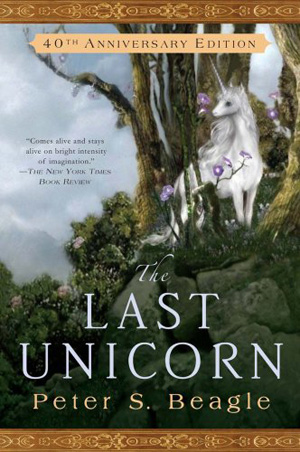
A Purple Crayon is a nod to a child's imagination that all of us should cherish even as we age. One of my brother's customers had a little brother, now in his early 20's, who when asked as a child, "What do you want to be when you grow up?" consistently answered, "A purple crayon." As a child, he did not explain his reasoning. As a man, his reasoning is simple, "Shut Up!" While my brother and the customer laughed at the response, when I was told the story, I reflected on all the children I have worked with. No one wanted to become an object always a professional or a person such as "A doctor," "A [insert job] like Mommy/Daddy/other family member," "Mommy," "Daddy," or their older sibling.  Even when I think about my own childhood, looking through photo albums I was a fairy godmother, photographer, a gymnast, a teacher, an artist and a race car driver. Even now, I really enjoy dragons and unicorns but I do not think I wanted to become one as an adult. Why become someone or something permanently when you can continually change who you are through the video games you play, stories you create, books you read and the movies you watch? The idea of growth and change were qualities I embraced throughout my childhood and adulthood. It was what my mother instilled in both my brother and I throughout our childhood and adolescence. Through my favorite stories I read and watched I did become a dragon and unicorn: The Last Unicorn by Peter S. Beagle, (check out his page here. Hopefully he will come back to San Francisco soon! He is a wonderful person to meet and speak with so hopefully you get an opportunity to meet him as well!) The Baby Unicorn and The Flight of Dragons being my top three childhood favorites.


Another childhood favorite! Does anyone else remember the adventures of this brave mouse? 


Back to purple crayons. I still find it intriguing he chose purple specifically. He could have said an expected color such as red or blue (I am referring to cartoons such as Teenage Mutant Ninja Turtles and Mighty Morphin Power Rangers and Voltron where the popular characters are usually wearing these colors) but he chose purple. While many associate purple with royalty and power, I wonder what this child associated purple with. Maybe Barney? He was one popular dinosaur when his television show premiered. But we will never really know his reasoning. So how do we as educators promote a child's growing imagination? First, we must remember and reflect on our childhood to appreciate the dreams and wonders children hold dear. Second, providing children a secure space to freely become whoever they choose to be without labels or restrictions on their identity. 


During my childhood, I was indecisive about my favorite color. I liked them all! One thing I knew for sure was my tastes in stories, cartoons and video games. My love of RPGs (Role Playing Games) and later MMORPGs (Massively Multiplayer Online Role Playing Games) began with watching Star Wars, Thundercats, Silverhawks, Macross (introduced to U.S. audiences as Robotech) The Last Unicorn, The Flight of Dragons, The Lord of the Rings and The Hobbit animated features with my family. I did not realize until my adult years that the Japanese animation studio illustrating these animated features later reformed after bankruptcy and became Studio Ghibli, home of Miyazaki Hayao's animated features such as My Neighbor TotoroNausicaa of the Wind and what he has deemed his last film The Wind Rises.  


From the animated features pictured above, my interests in Anime, Japanese Animation, styled cartoons grew to include my interests in the video game franchises Phantasy Star and Final Fantasy. Phantasy Star first appeared on Sega Master System. Does anyone remember that system? I still remember when my mother first brought it home for my brother and I. Excitement! Ever since then, we owned every game console on exception of the Sega Genesis and Neo Geo. The photos below are from the game cover and a promotional artwork. Myau, was my favorite character in this series who gained an ability later on in the story to fly your party members to the fortress above the clouds. If you are interested, check out a Phantasy Star Saga fan page here


While many of us are able to revisit many wonderful memories from our childhood through looking at these images, images, brands and icons are ever present in children's lives. When you take your first education class do you remember the instructor mentioning children know icons before they can read? Coming from a family who read Marvel Comics daily, I knew exactly who this was before I knew the McDonald's icon. 


Superman, Spiderman and Batman I saved for last because they are representative of the power icons hold in children's lives. With recent movie additions over the past four years, these characters are well known to children's school gear, dramatic play, storytelling and at times problem solving in the Pre - K class: "Good guys save the day and bad guys go to jail so we are all good guys right?" Some educators I spoke with about their class favorite superheroes, they told me how violent capturing bad guys is. It seems children's love of superheroes gets lost in violence moving the focus from one's duty to be responsible, protect and care for others. When I graduated from undergrad, we were given the opportunity to vote on three commencement speakers, Steven Spielberg, Oprah and Christopher Reeve. Each of these individuals would have been a wonderful speaker but we all felt so honored to see and hear Christopher Reeve. We all wore Superman icons on our gowns; buttons, iron patches and "S" icon balloons adjourned many of our gowns while others wore "S" shirts under their gowns. Everyone was decked out in something with the "S!" 

When Christopher Reeve rolled up in his wheelchair, many of us had tears running down our cheeks. We were so high in the football stands but we could see him clearly. The stadium was silent as he adjusted his microphone before he spoke. He was smiling. He told us to persevere through all obstacles to reach our goal. The hard work would pay off in the future and to keep trying our best to reach our goals. When he finished his speech all of us jumped up to applaud and reveal our Superman gear if the gown was concealing it. Our school of scarlet and grey was covered in red and blue as he exited. I could not wait to tell my mother and brother who were somewhere in the stadium also watching and listening. When I managed to find them after the ceremony, my brother and I cheered and to this day are still so appreciative we got to hear him as my graduation speaker. The following year when we heard the news announcement that he had passed away, we were saddened and reflected on how he really was a Superman through his philanthropy, activism and using his celebrity to bring awareness to world issues. As for the children we work with who enjoy superheroes, just think they could become the next Christopher Reeve or grow up into a young adult who was a child who simply loved purple crayons. 


Wall O Text Two: Robotic Rambles and a Dedication


As much as I am online through video gaming, I never thought to devote time to blogging or forums. Have you ever read gamer forums where multiple players write huge "wall- o - text" for attention, to complain or present what they feel is an elaborate strategy amid multiple syntax errors that makes you question whether you should go to bed or stay up longer to explain to them that writing well even on an online game is the most effective strategy for successful communication? Well, life in the education field is just like online gaming. With everyone coming into the classroom from various backgrounds, different generations and carrying multiple agendas, sometimes the classroom feels far too chaotic than I care to tolerate.

I have worked in many classrooms because my working experience is not as happy, upbeat or pleasant as other educators I have met. While I love the education field, I am the triangle in a square classroom. It may look like I fit in from afar but I do not. My sharp corners are always sticking out and I have no reason to hide them. While this trait has really helped me positively change learning environments to support children who educators labeled "difficult" and "misunderstood" by giving them a space to be freely be themselves, it has isolated me from other educators. Some events that happened to me during my teaching journey, especially those in front of children would make you gasp. I did not yield or conform to show children what it means to have courage amid conflict, preserve your individuality as well as analyze the actions of others by developing a careful ear and sensitive eye to write down everything said and each action done to document an occurrence fully. It is exhausting to remember every single detail of situations from the past and present. One of Lisa Delpit's works (1996) had a passage that reminded me there was a lot of work to do in education and really calls us to action. "Time to reassess what we are doing in public schools and universities to include other voices, other experiences; time to seek the diversity in our educational movements that we talk about seeing in our classroom."

The freedom I helped those children realize was their voice. When you speak up with purpose and clarity, children and adults will stop and listen. Sounds easy enough but for adults...speaking up can become difficult or the source of what is now fashionably called "starting drama." In some school environments I have entered, educators only want to hear the only voice they find relevant: the one who signs their timesheet. Even in my experience signing timesheets, hearing voices while using my voice was a skill I was continually developing the difference was I heard all of you. Our temperaments and perceptions are two keys to building a relationship with children, adults and building a community that we embark on from birth and constantly struggle to figure out how to use effectively as we age.

I have really high standards and expectations of people I encounter, especially from educators, so when I feel things are not flowing correctly I will stop you immediately for a discussion. Do you ever wonder why a child stops you during class time when something seems off or unrealistic? Like adults, children have high expectations of adults and are constructing meaning from what is said to make sense of how the adult world works. So we really do need to provide a good example of how to communicate effectively as well as being courageous to speak up while being tactful. Just remember the children are watching adult behavior everywhere you go, both inside and outside of the classroom. Even when you are on vacation! An educator's work is continuous and that is exactly what we signed up for.

I have witnessed and worked with some adults who work very well together and truly support each other throughout their day. Yet, the reality for most of my teaching career is made of teachers battling it out with teachers for dominance in the classroom using a hierarchy based on their education level. We should all be united together so what is the problem? Why is there so much competition among each other for such a low paying career?

As for some administrators who are either forgetting we are all on the same team to pursue revamping the image of children to really change the status of children and education or they just want it their way out of arrogance and ego. As educators, we want children to become independent, competent and innately motivated to seek knowledge so why are teachers with less education accepting being turned into robots and doing what they are told without question? Is it originating from fear of losing their job? Is there a sense of hopelessness or complacency? What do the children we teach have to look forward to in their adult life if they can only enjoy their freedom, competence and independence during their childhood? 

I have always felt this fire to pursue everything I could in life. I remember how my passion (in this case my outspokenness) during undergrad caught the attention of one of my older classmates in Japanese class during my sophomore year. He was a seven year senior, it was common at that school for students to take multiple years to finish their degree. Many students chose to work or begin a career early and left university but return in their late 20's and 30's to finish their Bachelor degree. So this student told me when he was younger he was just like me but his fire died as he aged and mine would too. I wish I kept in touch with him to tell him my passion is even worse now! When I bought my first 30 Seconds to Mars CD in December 2009, I realized Closer to the Edge embodied my teaching career. There are times when I feel like my time in the classroom is over and then I am suddenly pulled right back into it. Teaching on the edge fueled my school age curriculum to break boundaries using technology, foreign language and social play in a way that supported children's individuality and learning style. This occurrence helped me understand my time in the classroom is just a part of my journey so I do wonder where my next adventure in education will take me. But to begin this journey the correct way, a very quick dedication to all the teachers and administrators who behaved badly during my teaching journey, I finally bid you farewell. Your actions allowed me to focus even harder on gaining even more knowledge and fire because let’s face it you will always stay exactly who and where you are while I am sailing forward.

When you check out the video there is a lot going on visually and verbally. I recommend listening to the lyrics first and then the interviews from the youth and watching at the visuals last.  Enjoy!


Wall O Text One: Technology

Hi there! Thanks for stopping by. The purpose of this blog is to fulfill a creative multimedia component for my field study in elementary education – early childhood education this Spring 2014. Throughout this blog I will address intersections between technology, mass media and popular culture in the classroom. Whether positive or negative, it is a part of all our learning experiences and I know there are many educators and parents who want its presence removed from the classroom because "children have so much of it at home," but you have to face it…it is here to stay. Whether or not you use technology in your home, workplace or classroom is your lifestyle choice. Yet, the choice of children today who have the presence of technology in their lives is to continually explore it throughout their entire school day. So what path is the best path to follow for educators and parents to place children on the best path to learning? 

As a child who grew up with computers and video game consoles while still learning to walk and talk, turning on machines was a natural daily occurrence for me. Yet there are a few differences between my childhood and children I work with today. I actually loved going outside to climb a tree, getting stuck and calling for help. Finding the best hide and seek spots in my backyard where no one could find me. But why do children want to go outside less? I do not know. Is it safe outside? What is the weather like? Do they feel they have something to look forward to that cannot be found online? It may be that children in our classrooms are seeking building connections with others. Online communities do provide children ways of connecting to other children not only in their community but all over the world. A pen pal can be made after one conversation online and sent an email in seconds compared to pen pals organization ads listed in a  published book that pairs children up to mailing letters and exchange correspondence between children from different countries and await the arrival of the letter. 

In elementary classrooms I have worked in, I have noticed children have trouble building connecting to others. Their time in the classroom is rushed and stuffed with so much information, I know their head is spinning when after-school time arrives. Sometimes they just want to “do nothing” or just “play.” So part of our role as educators is to facilitate learning when children reach this point of overload even when it occurs earlier in the day. Since we are all different people, our methods vary. When you turn on your laptop, tablet or phone, have you noticed how quickly overload dissipates? Have you seen a child’s eyes widen as the lights of the screen flicker with information?

Children now are receptive to technology devices as knowledge carriers. Before you could ask your grandparents how to spell a hard word like, “dubious,” now children sound it out the best they can on Google to figure out the spelling. The auto spell feature is both a help and handicap for children. While they figure out the spelling based on what auto spell reveals, they are not learning to spell the word independently. Handwriting has taken a hit, as a forgotten art, children’s handwriting is really illegible at times and worse of all it is empty, lacking their personality and style. 

Childhood in the late 2000’s is not what it was for any of us born before 2000. Children who are 10-12 tell me they feel the way the children do in the television commercials where children now have it so easy. They can watch television anywhere in the house where there is a (cable) box. No longer do children have to wait for a parent or other child to finish watching their show nor do they have to miss the show because four shows maximum can be recorded simultaneously. Do you see a connection between technology advancement and a child’s patience? 

Technology provides things right now for both children and adults. As for adults, they are losing patience as well. Children are shipped off to other parts of the house and not included in what their parents are doing during “me time.” Yes, many children preschool – school age have told me and other  educators through conversations I overheard that this goes on in their household. Just a note for parents, when your child is feeling alone during school time, they do tell on you whether you are aware of it or not. As for another note of adult patience, have you seen adults driving recklessly to get their child to school? Seriously slow down! You are already late so what is the point of rushing and causing an accident and putting everyone on the road including your child danger? 

As we all take a moment to slow down and think about technology in the lives of all, I will leave you with Sugata Mitra's words from his TED Talk. "My wish is to help design a future of learning by supporting children all over the world to tap into their wonder and their ability to work together. Help me build this school it will be called The School in the Cloud."